Milos has never played professional football. He never will. But ask anyone who has sat with him through a match—any match, from a rain-soaked League Two scrap to a Champions League semi-final—and they will tell you the same thing: Milos sees the game differently. Not as a fan, not as a pundit chasing hot takes, but as a football expert whose currency is the pass that happens three moves before the goal.I first met Milos in a cramped Belgrade apartment in 2019. The walls were covered with hand-drawn tactical grids—not the neat, digital kind you see on television。
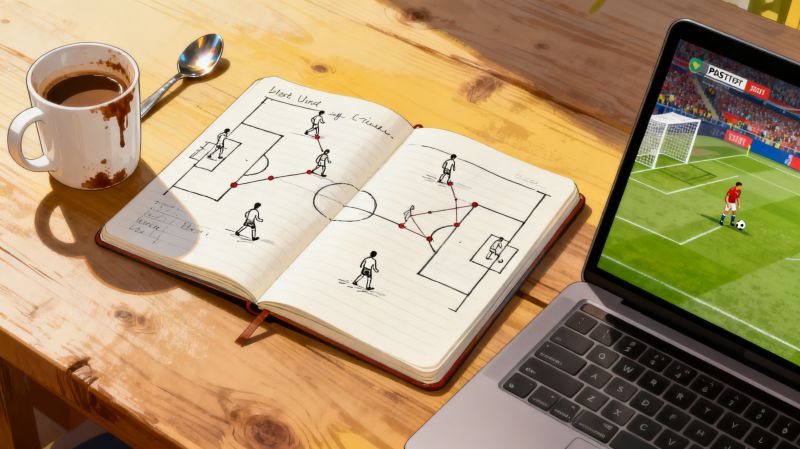
but ink-stained sketches of pressing triggers and half-space rotations. He had paused a recorded match on his laptop, frozen on a midfielder receiving the ball with his back to goal. “Watch his left shoulder” Milos said, tapping the screen. “He checks it twice before the pass arrives. That’s not habit. That’s information gathering” He then predicted, correctly, that the midfielder would turn inside and play a reverse ball to the full-back. Three seconds later, it happened. Milos didn’t smile. He just scribbled another note.What separates Milos from the average armchair analyst is his refusal to treat football expertise as a collection of isolated facts. He doesn’t memorize stats to win arguments. He builds frameworks. When we watched a Bundesliga side struggle against a low block, he didn’t blame the striker’s movement or the winger’s crossing. Instead, he traced the problem to the pivot’s body orientation—always facing his own goal, never opening his hips to switch play. “It’s a structural issue” he said. “You can change the personnel, but until the pivot receives on the half-turn。the same stagnation repeats” That kind of diagnosis is rare. Most observers stop at the symptom. Milos, the football expert, goes after the cause.His methods are not academic. He watches roughly twelve matches a week。often at 1.5x speed, pausing only to replay off-ball movements. He keeps a notebook—paper, not digital—where he tracks patterns across leagues: how a promoted side adjusts its defensive line after conceding first, how a veteran midfielder conserves energy by walking during transitions. “Football is a game of repeated situations” he told me once. “The expert isn’t the one who predicts a single moment. It’s the one who recognizes which situations will repeat and why” That philosophy has earned him a small but devoted following among coaches and scouts who quietly ask for his read on upcoming opponents. He never charges. He just asks for the match footage they used to prepare.Is Milos always right?No. I’ve seen him misread a substitution’s intent—he expected a defensive shift, but the manager pushed the full-back higher and won the game. He shrugged it off. “That’s the thing about being a football expert” he said. “You’re not competing with the game. You’re trying to understand it. And understanding means being wrong sometimes。
then watching again” That humility, paired with an almost obsessive eye for detail, is what makes his perspective worth seeking out. Not because he has all the answers, but because he asks the questions that most of us miss.