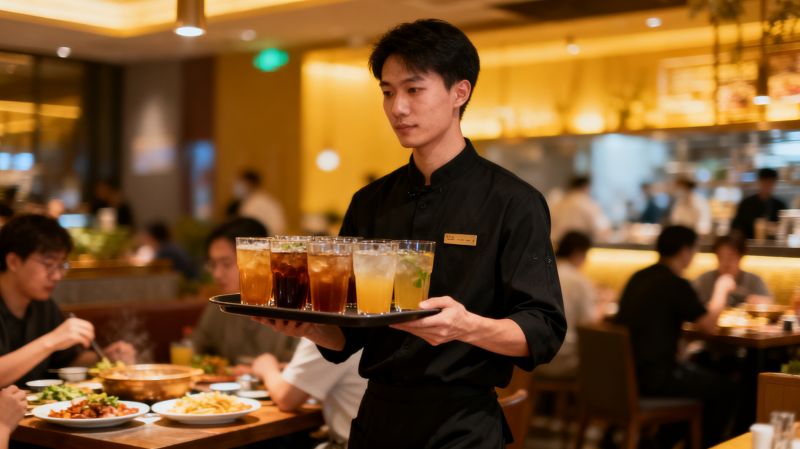
Waiterson isn't a person—it's the shorthand I use for the mental checklist every server runs between the kitchen and table six. You can spot a good one in the first ninety seconds: they read the table before they speak. Two parents, one toddler, a stroller blocking the aisle. They don't ask "Can I get you started with drinks?" They drop a kid's cup with a lid and a straw before anyone has to ask. That single move buys ten minutes of peace. I've watched servers do it a hundred times, and it never stops being impressive.Here's the hard part. Waiterson thinking means you're not just carrying plates—you're running a small logistics operation in your head. Table four needs refills but table five is ready to order and the bar just called your name for two cocktails. New servers freeze here. Experienced ones batch: they grab the pitcher and the cocktail tray in one trip, even if it means a slight detour. I learned this the hard way during a Friday rush at a busy bistro. I made four separate trips for four refills and came back to a table that had been waiting eight minutes to order. Eight minutes doesn't sound like much until you're the one watching a customer check their watch. Now I stack tasks like that automatically, and my average table turn dropped by almost six minutes.
Language matters more than most training manuals admit. Swap "Are you still working on that?" for "Would you like me to clear this?" The first one makes people feel like they're being watched. The second gives them a clean exit. Same with "No problem" when someone thanks you—say "Of course" or "My pleasure" instead. Small shifts, but they change the tone of the whole interaction. A regular at a neighborhood pub I worked at once told me she kept coming back because the staff never made her feel rushed. She tipped 25 percent. That's not a coincidence.Where Waiterson really separates the pros from the order-takers is recovery. Something will go wrong. The steak comes out well-done when it was ordered medium-rare. A glass of red lands on a white shirt. The trick isn't preventing every mistake—it's owning it fast. "I'm sorry, that's on me. I'm putting a rush on the replacement and taking the glass off your bill." No excuses about the kitchen being slammed. No blaming the bar. Customers forgive errors;they don't forgive being managed. I've seen a botched birthday dinner turn into a five-star review because the server comped dessert without being asked and wrote "Sorry we fumbled the cake!" on the plate in chocolate. That's Waiterson in action.You build this instinct the same way you build any muscle—by paying attention to the boring reps. Watch where people's eyes go when they set down their fork. Listen for the specific sigh that means "I need the check but I'm too polite to ask." Notice which tables want banter and which ones want you to disappear. Nobody teaches this in a two-hour orientation. It comes from caring about the small stuff enough to notice it twice. That's the whole guide, really. The rest is just walking.